How do you stay ahead of the visible signs of ageing?
A pure collagen that nourishes the skin from within turns out to make the difference. As a fixed part of your morning.
Aduller complexion. Fine lines. A face that takes longer to spring back in the morning. It comes with getting older, and it preoccupies a lot of women, usually from the moment the mirror shows something make-up no longer covers.
After cream after serum after treatment, many have found something they no longer look for on the outside, but build from within: pure collagen peptides. Women who make it a daily ritual are clear about it: the difference isn't a miracle product, it's what you consistently keep up.
Because most skincare works on the outside of something that begins within. And that is exactly where your skin is made.

Your skin is, to a large extent… collagen.
Collagen is the protein that gives your skin its firmness, resilience and that bounce. It forms the scaffolding beneath the surface. From around your mid-twenties your body makes a little less of it each year. No drama, just biology.
But it explains why your skin behaves differently at 35 than it did at 25, however much cream you apply. And here's where the misunderstanding sits: the collagen molecules in most creams are simply too large to reach the layer where your skin builds its firmness. They nourish the surface. Not the structure.
“Skincare has long since stopped being about what you put on it, and started being about what you give your skin to work with.”
5 things skin experts wish more women knew about collagen.

Your skin is largely collagen. And production slows sooner than you think.
Most of the firmness you took for granted in your twenties came from collagen. The decline starts quietly, years before you notice anything. That's why it feels so sudden when you finally do see it, the process has been under way for a long time.

Cream nourishes the surface. Collagen works where your skin is built.
A good cream isn't wasted. Hydration and protection matter. But the structure of your skin is built deeper than a cream can reach. If you only keep working on the outside, you're answering an inside question with an outside answer.

The form matters. So does how much of it you're actually getting.
Hydrolysed collagen peptides are broken down small enough for your body to absorb, that's the form. Type I and III are associated with skin, hair and nails; Type II with cartilage. Then there's the amount. Plenty of powders give you five grams a serving, and gummies less. Enough to print "collagen" on the front. Not enough to do much. Read the ingredients too: if sweeteners and flavourings are listed before the collagen, most of what you're paying for isn't collagen.

It's a ritual, not a quick fix. And that's exactly where the power lies.
Your skin renews in cycles of weeks, not days. The women who are happiest with it treat collagen as a fixed part of their morning rather than a cure, like brushing their teeth. Most notice their nails first, somewhere around week six, and their skin a fortnight after that. Give it eight weeks before you judge it.

The best time to start is before you think you need it.
Care is not repair, it is maintenance. Starting early means working with your skin rather than against the clock. Not out of fear, but out of self-care. It is an investment in how you want to feel a few years from now.
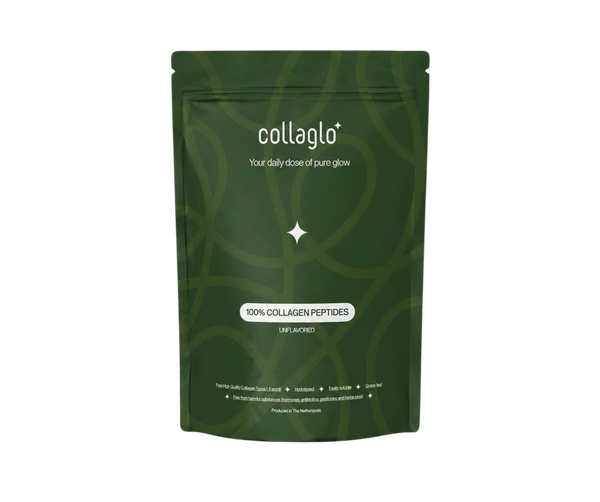
Put those five insights side by side and a logical conclusion emerges: skin that's built from within needs something that replenishes from within, in a form your body can use, as a fixed ritual. That's exactly what CollaGlo was made for.